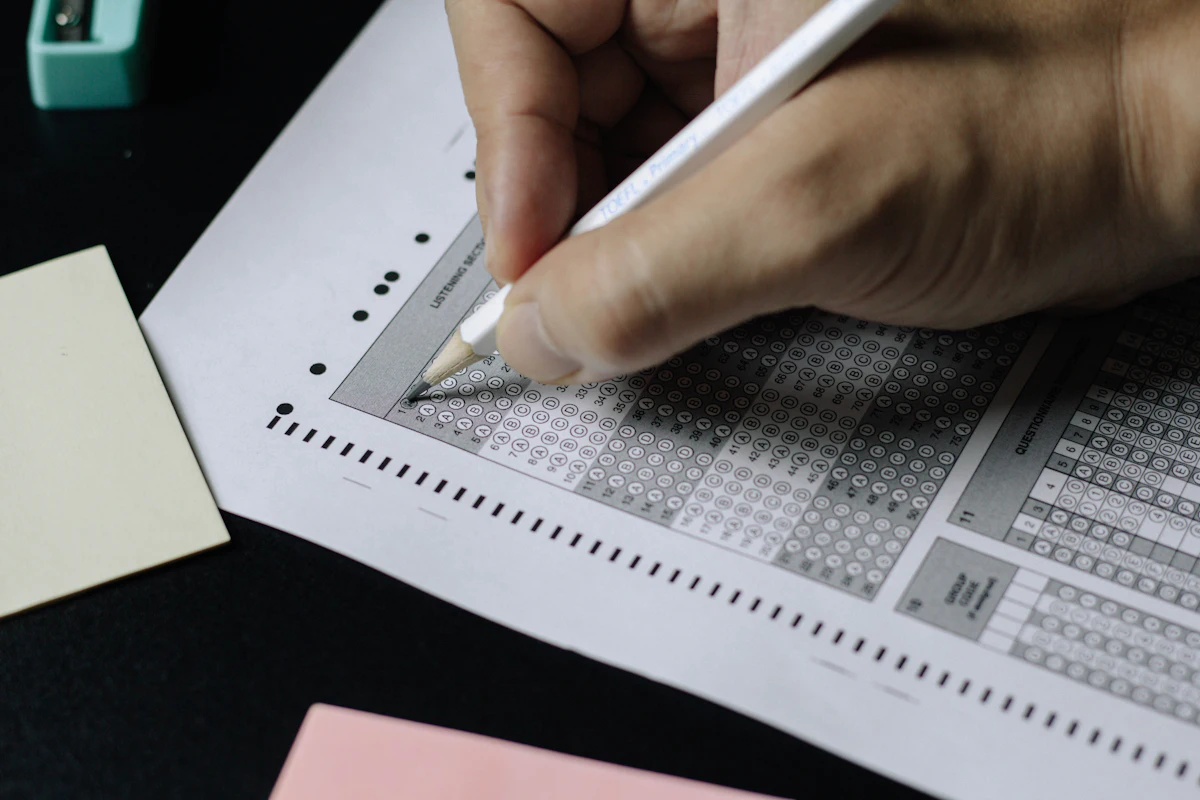
For many candidates, IELTS Reading is the toughest part of the exam — the passages are long, the questions are many, and time is painfully tight. In reality, success in this section depends far less on understanding every single word and far more on the right strategy and time management. Below is a start-to-finish walkthrough of the IELTS Reading strategies that matter.
Know the format first
The IELTS Reading section lasts 60 minutes and contains 40 questions. The Academic version gives you 3 long passages; General Training uses several shorter texts. The most important rules:
- There is no separate transfer time in Reading — copying your answers onto the answer sheet has to happen within the same 60 minutes.
- Every correct answer is worth 1 mark. The questions are not easy, but there is no penalty for a wrong answer — so never leave a question blank; write something even if it's a guess.
Skimming and scanning — the two core skills
These two are the foundation of IELTS Reading. Don't mix them up:
- Skimming — running your eyes over the text quickly to grasp the general topic and structure. Pay attention to the first and last sentence of each paragraph — the main idea usually lives there. The goal: within 2-3 minutes, be able to answer "What is this text about, and which paragraph covers what?"
- Scanning — sweeping your eyes across the text to locate a specific piece of information (a name, date, number, keyword). Here you are not reading — you are hunting the exact word you're looking for.
Tip: Always read the question first, not the passage. Underline the keywords in the question (names, places, numbers — these are quick to find by scanning), then go to the text to look for the answer. You will not have time to read the whole passage carefully from start to finish.
Question types and how to crack them
True / False / Not Given
This is the question type people get wrong most often. Be crystal clear on the difference:
- True — the statement agrees with the information in the passage.
- False — the statement contradicts the passage (the text says the opposite).
- Not Given — the passage contains no information about it; you can neither confirm nor deny it.
The biggest mistake: instantly marking False just because "it isn't mentioned in the text". No — if the passage neither confirms nor contradicts the statement, the answer is Not Given. For example, if the passage says "The museum opened in 1990":
- Statement: "The museum opened in 1990." → True
- Statement: "The museum opened in 2005." → False (contradicts)
- Statement: "The museum is the most popular in the city." → Not Given (nothing is said about its popularity)
Tip: Absolute words like "all", "only", "never", "always" often push a statement towards False or Not Given. If the passage says "some students" but the statement says "all students" — that's already a mismatch.
Matching Headings
Here you choose the correct heading for each paragraph. The strategy:
- Skim the paragraph first — find the main idea, and don't get pulled into the details.
- Headings usually point to the overall idea of the whole paragraph, not to a single detail. Don't be fooled by a word that appears in just one sentence.
- Start with the easiest, most obvious paragraphs; leave the hard ones for the end. Cross off headings as you use them — with fewer options left, the remaining choices get easier.
Other common types: Multiple choice, Sentence/Summary completion (fill in the sentence — obey the word limit strictly, e.g. "NO MORE THAN TWO WORDS"), Matching information and Short answer. In every one, watch the word limit and your spelling — a spelling mistake makes the answer wrong.
Time management: 60 minutes / 40 questions
The most sensible split is roughly 20 minutes per passage:
| Stage | Time |
|---|---|
| Passage 1 (usually the easiest) | ~17-18 minutes |
| Passage 2 (medium) | ~20 minutes |
| Passage 3 (the hardest) | ~22 minutes |
Practical rules:
- Never spend more than 1.5 minutes on a single question. If you get stuck — mark it and come back later; don't burn your time on one question.
- Write answers onto the answer sheet as soon as you work them out; a rushed copy-over at the end is the single biggest source of mistakes.
- Keep the last 2-3 minutes for filling in any remaining blanks with your best guess.
You only truly absorb these strategies through practice. To find out where you stand, take the English level test; and if your reading and vocabulary base is still weak, strengthen the foundation with the learn English from scratch course.
Final advice
A high IELTS Reading score is not about reading fast — it's about reading smart. See the big picture with skimming, pin down the exact answer with scanning, control your time strictly, and leave no question blank.
Start preparing today — sign up for free and raise your score step by step with practice exercises and the level test on the CrushIELTS platform.